
























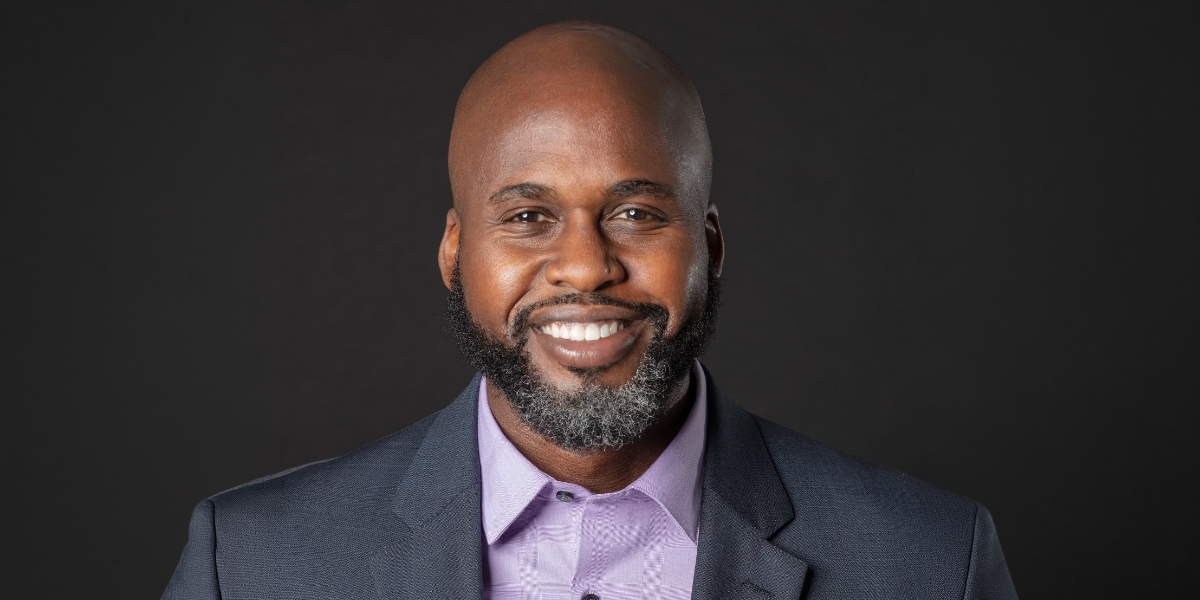
Anyone who has hired a contractor off social media or wired a deposit to a vendor they found online knows the quiet worry that comes with it. The profile looks legitimate. The reviews seem fine. Someone you know made the introduction. And you still have no real way to know who you’re dealing with until the work starts, or until the money’s gone. That gap between what a business presents and what it actually is sits at the center of SocialTrust 360, a vendor-verification platform built by security and risk intelligence professional Jason David.
The platform answers a question most people can’t easily dig into on their own: is this person or company who they say they are? SocialTrust 360 looks at business, reputational, legal, sanctions, online, and fraud-related indicators, then organizes what it finds into a standardized risk report. You enter a seller’s name, website, or social media profile, the system pulls from publicly available information across trusted sources, and a few minutes later you get a report with a trust score, a radar chart, and recommendations. It doesn’t ask for any personal information from the person running the check.
Jason David built the company around a pattern he kept running into, both in his career and online. Individuals and small businesses promote their services everywhere, and plenty are legitimate. Others overstate their experience, their qualifications, their credibility. People hire based on a good-looking profile or a few reviews, then get scammed, underserved, or left out of pocket. He watched the same weakness play out inside bigger organizations too, where new vendors and contractors get onboarded with little real due diligence. And when companies do run checks, the process tends to be manual, inconsistent, and slow. SocialTrust 360 was his attempt to close that gap with something faster and more uniform.
Each report covers up to eight areas, and they’re the ones that actually trip people up. Identity verification confirms authenticity through multi-layer checks. Website and domain authenticity looks at how old a domain is, its SSL, and whether the hosting holds up. Social media analysis examines engagement patterns and whether an audience looks real or inflated. The platform pulls customer reviews from verified sites, checks business registrations, licenses, and regulatory status, and gauges reputation across platforms. It flags fraud risk indicators and maps out network connections and affiliations. The radar chart puts all eight dimensions in one view, so instead of reading a wall of raw data you get a quick sense of where the risk actually sits.
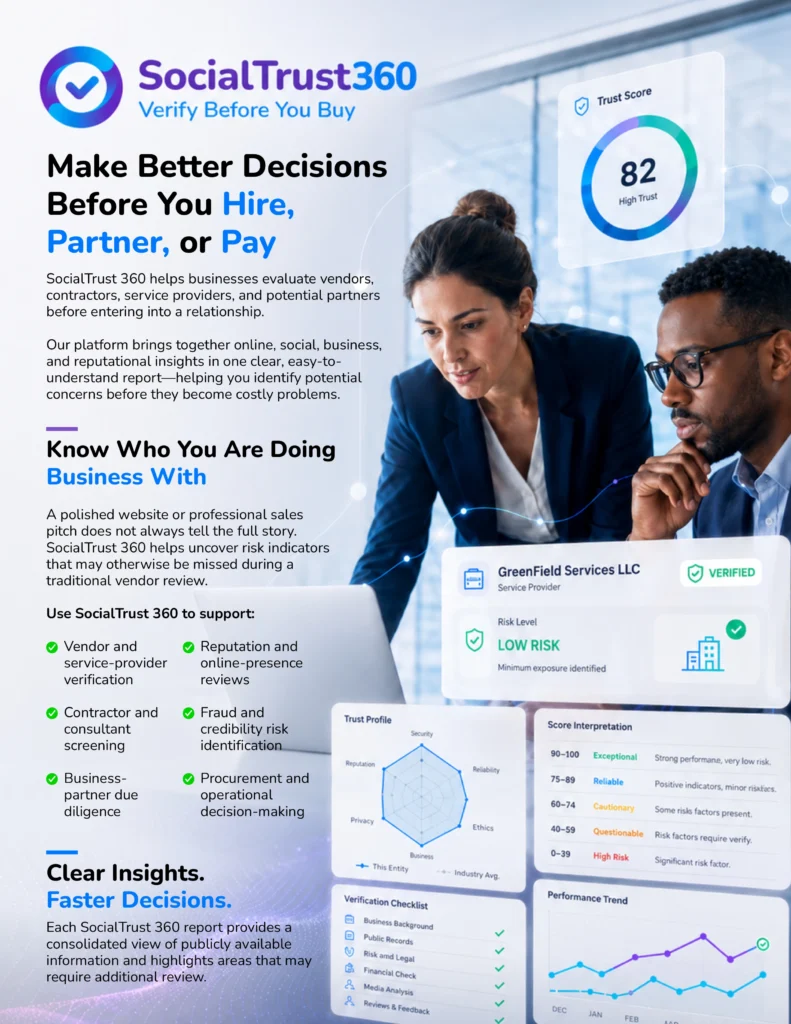
The whole thing is built for people who don’t have a compliance department on speed dial. Reports usually land within two to five minutes, and the system runs on credits, one per report, with a free credit to start. If a report can’t be completed because there isn’t enough data to work with, the credit gets refunded automatically and you can rerun it for nothing. Payments go through Stripe, and you can cancel whenever you want without losing access to reports you’ve already run.
David is upfront about what the tool is and isn’t. Reports draw on independent data sources and public signals, which makes them strong indicators of trustworthiness rather than guarantees. He calls it an informational resource, one that backs up a decision instead of making it for you. A report reflects whatever data was available at the time, so if a seller later swaps a name or website, you can run a fresh one to see the updated picture. That distinction matters, because the point isn’t to hand down a verdict. It’s to surface warning signs early enough that you can do something about them.
The message Jason David wants to land is simple. A polished online presence, positive reviews, or a personal referral shouldn’t stand in for actually checking someone out. Those things are easy to fake, and they’re exactly what people trust by default. A few minutes of verification before you sign an agreement, share sensitive information, or send payment can save you from fraud, a financial hit, and the kind of business relationship that ends up costing way more than it should. What used to live inside professional risk teams now fits into something a small business owner or an individual can actually use.
The reason the concept works is how ordinary the underlying problem is. Almost everyone has taken a chance on a vendor they couldn’t fully vet, because vetting was a hassle and the profile looked fine. SocialTrust 360 is a bet that if verification gets fast and standardized enough, people will finally bother to do it, and close that gap between how trustworthy a business looks and how trustworthy it really is before it turns into a loss.
More about the company is on LinkedIn, Instagram, and Facebook, and Jason David can be found on his personal LinkedIn.