
























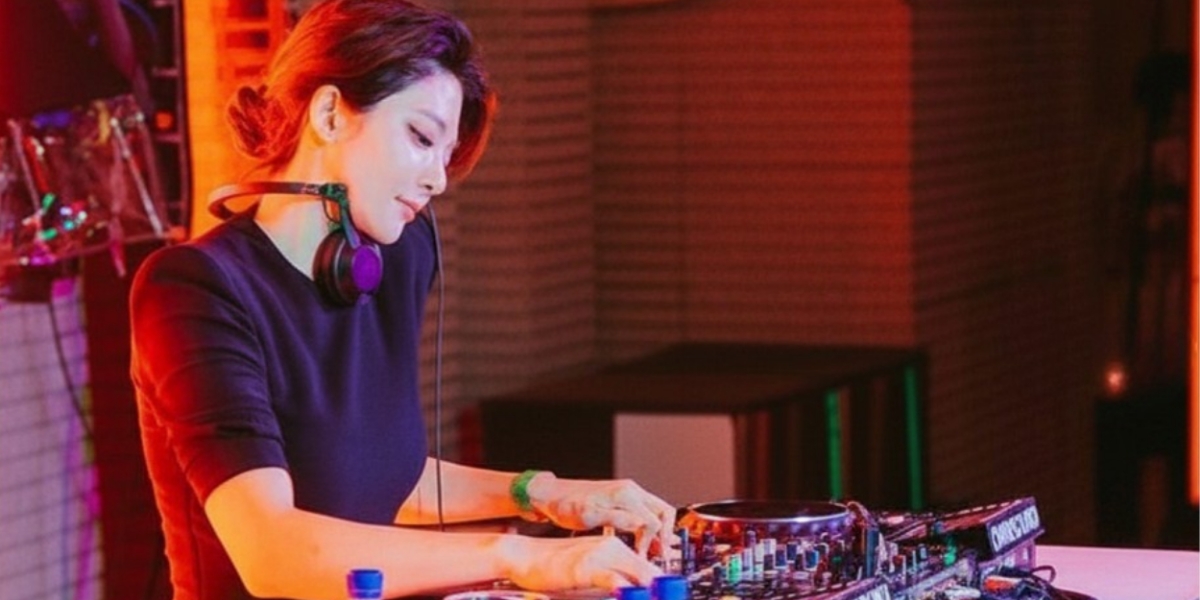
Every DJ eventually faces the same challenge: playing music is not enough. The real task is developing a sound that listeners can recognise and associate with the person behind the decks.
For Silverstar Oh, that process is centred on techno and house.
The Korean DJ and actress, whose Korean name is Eunbyeol Oh, has chosen two genres with deep histories and demanding audiences. Both leave little room for careless programming. House depends on groove, warmth, and movement, while techno often relies on precision, repetition, and controlled intensity. Working between them requires a DJ to understand not only individual tracks, but how those tracks relate to one another over the course of a performance.
Silverstar’s growing DJ career is therefore less about adopting a fashionable title and more about learning the craft of selection. A well-constructed set must have shape. The opening establishes expectations, the middle develops the atmosphere, and the closing determines what the audience remembers. Even subtle choices, such as when to introduce a heavier rhythm or remove an element from the mix, can change the direction of the room.
Her work in entertainment began before she stepped behind the decks. Silverstar appeared in the Korean television drama Secrets and Lies in 2018, giving her direct experience of professional acting and television production. That role places her among the relatively small number of performers who have worked in both scripted drama and electronic music.
Acting also introduced her to a creative process built on preparation. A television scene may appear effortless when broadcast, but it depends on rehearsals, repeated takes, direction, and close attention to detail. DJing has its own version of that unseen work. Hours of listening, organising music, studying transitions, and refining track combinations take place before an audience hears the final result.
This quieter side of the profession is often overlooked. Promotional photographs may introduce a DJ visually, but longevity depends on musical judgment. Audiences return when they trust the performer to create a strong atmosphere and take them somewhere they could not reach through an ordinary playlist.
Silverstar Oh’s focus on techno and house gives her room to develop that trust. Rather than attempting to cover every corner of electronic music, she can build depth within genres that reward consistency and careful listening.
Her acting career remains an important part of her professional story, but music now gives her another way to communicate. There is no script in the DJ booth and no dialogue to deliver. Instead, every decision is made through rhythm, sequencing, and sound.
As Silverstar Oh continues refining her musical identity, her progress will ultimately be measured by what matters most for any DJ: the quality of the set, the connection with the audience, and the ability to turn a collection of records into a performance with its own character.