

























Ask a screenwriter where a script actually starts and the honest answer is usually whatever window happens to be open. Often that’s Google Docs, sitting in the same tab strip as grocery lists and unanswered email. The assumption baked into most professional software is that real work moves somewhere else before it counts. Fountain+ was built on the opposite premise.
The tools came out of a practical problem. Their creator, Pistol Taeja, who goes by @reallyskint online, spent ten years as a game developer and wrote in his spare time, work that produced several manga including Salaryman and Our Baby Is Strange. Getting those pages drawn meant constant back and forth with the artists, who needed a clear story to work from. That need produced Mangaplay Studio and Fountain+ Screenwriter For Google Docs. Taeja built them while making his own manga and short films, and because he wanted to keep drafting in Google Docs and Obsidian, he wrote the formatting and export steps that were missing instead of moving somewhere new.
Screenplay Writer For Google Docs is where most people meet the suite, and Taeja’s own shorthand for it is Writer-Duet for Google Docs. It’s a free Chrome extension that works inside the document itself, dropping scene headings, character cues and dialogue into industry layout while the writer types. That’s the time it’s built to give back, since nobody is reformatting a draft by hand or rebuilding margins that slipped somewhere around page forty. Structure is the part it can’t supply, and the site publishes a guide on how to outline a screenplay for anyone coming to the format cold. When the cut settles, one button exports a clean PDF for readers or a Final Draft file for anyone downstream, and Taeja says there’s no limit on how often that button gets pressed.
Because the work never leaves Google Docs, comments and version history keep working exactly as they did. A collaborator opens the same link and reads a properly laid out script rather than a wall of raw text. Nothing has to be copied into a separate app first, and nobody is asked to install something they don’t already have.
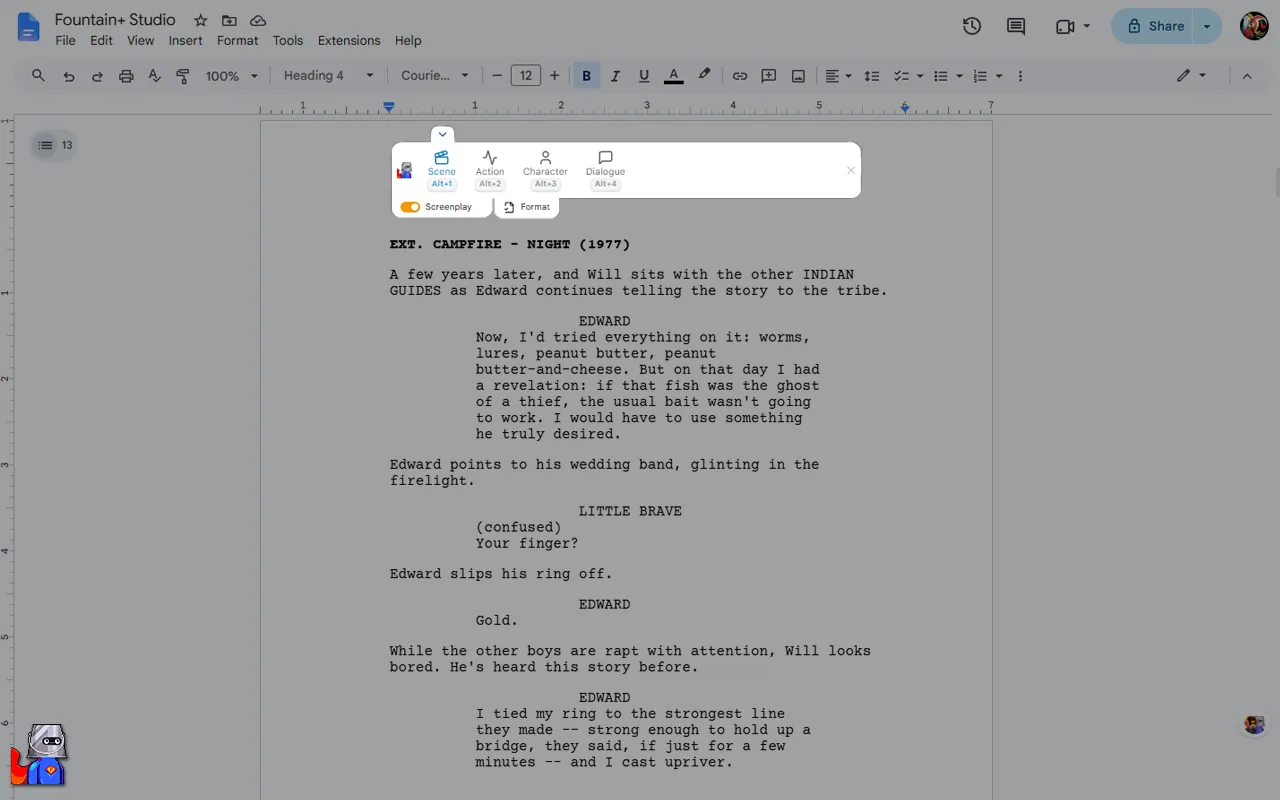
The extension is one of five products sharing a single engine and one login. Mobile versions for Android and iOS open the same document and hold character names, headings and dialogue in shape on a small screen, so an idea that arrives on the bus goes into the script instead of a notes app. For heavier jobs, the Fountain+ Mangaplay Desktop Writer installs on Windows and macOS and keeps the whole project on the user’s own drive, syncing outward only when the writer chooses. Hundreds of storyboard frames load from disk without lag, a dropped connection doesn’t stop the work, and a finished chapter commits into version control alongside the rest of a team’s material.
Fountain Man covers the lighter end. Drop a script into a Discord channel and the bot lays it out for the room, and it answers character and location questions on request, in the thread where the conversation is already happening. Because it shares the Fountain+ profile, a count it gives in chat matches the count the dashboard gives.
That dashboard holds the account, the saved work and two utilities. A converter turns a file into a PDF or a Final Draft document, or back the other way. A checker and pre-coverage tool reports scene counts, character lines and location reports before a cut goes out for notes. Supported formats include .fountain, .mangaplay.md, .fdx, .fadein, .pdf, .docx and .txt.
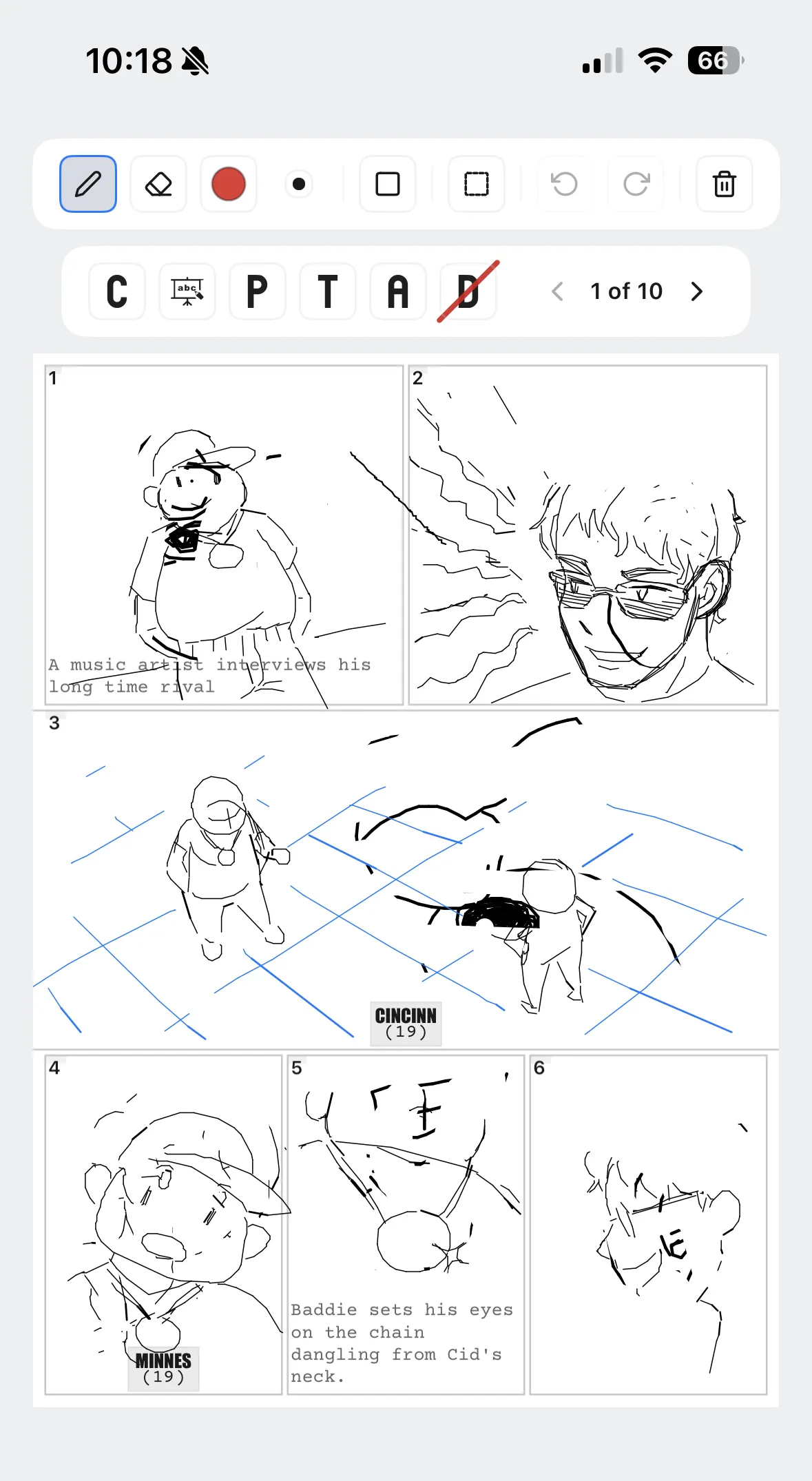
Comics and manga have their own product. Mangaplay Studio uses the Mangaplay Format, a superset of Fountain, so a comic script, manga script, webtoon or graphic novel can be written in plain text while the storyboard and panel layout render in real time, with no template to fill in first. It runs as a free Chrome extension for Google Docs or as a standalone web app, and the project’s own walkthrough on how to make a manga in Google Docs covers the setup. One Chrome Web Store review put the value plainly: “Greatly improves the writer / artist pipeline.”
What stands out about the pitch is how modest it is. The suite exists to improve the tools people already open rather than replace them, and the argument underneath it is simple: layout is clerical work, not craft, and clerical work shouldn’t cost a subscription, a migration or an export cap. Adding the extension takes under a minute and costs nothing, and what it buys back is the time that would otherwise go into fixing margins. Formatting was never the hard part of writing a screenplay. It was just the part that made people leave Google Docs.
Fountain+ is available at fountain.plus.