

























There is a particular kind of confidence that does not announce itself, a cultivated restraint that signals depth rather than spectacle. Andrew Arceci’s Winchendon Music Festival operates within that register. It does not chase headlines or rely on grand gestures. Instead, it has built a reputation on something far rarer, a commitment to thoughtful programming, intellectual ambition, and an unwavering belief that great music should remain within reach.
Arceci, a musician of considerable range and scholarly inclination, has shaped the festival into an extension of his own artistic philosophy. His career moves fluidly between historical performance practice and contemporary inquiry, and that same fluidity defines the festival he has built. There is no rigid adherence to category or expectation. The Winchendon Music Festival resists being easily summarized, which is precisely what gives it its distinctive appeal.
What unfolds each season in Winchendon, Massachusetts, feels less like a conventional festival and more like a carefully composed experience. Programs are assembled with a sense of narrative elegance that reveals itself gradually. Early music might share space with newly commissioned works, while familiar repertoire is reframed through unexpected context. These juxtapositions never feel forced. They unfold with a quiet logic that invites the listener to make connections, to hear across time rather than within it.
The festival’s origins remain deeply personal. Established in memory of Arceci’s father, it began as an intimate act of tribute. That sense of intention has never dissipated, even as the festival has grown in scale and reputation. If anything, the expansion has only clarified its purpose. Each performance carries a sense of deliberateness, as though it has been chosen not only for its artistic merit but for the conversation it might inspire. Perhaps the most quietly radical aspect of the Winchendon Music Festival is its insistence on remaining free. In a cultural landscape where exclusivity is often mistaken for prestige, this decision stands apart. Access is not framed as a secondary concern or a gesture of goodwill. It is foundational. The absence of a ticket price does not diminish the experience. It elevates it by removing the transactional barrier that so often defines the relationship between art and audience.
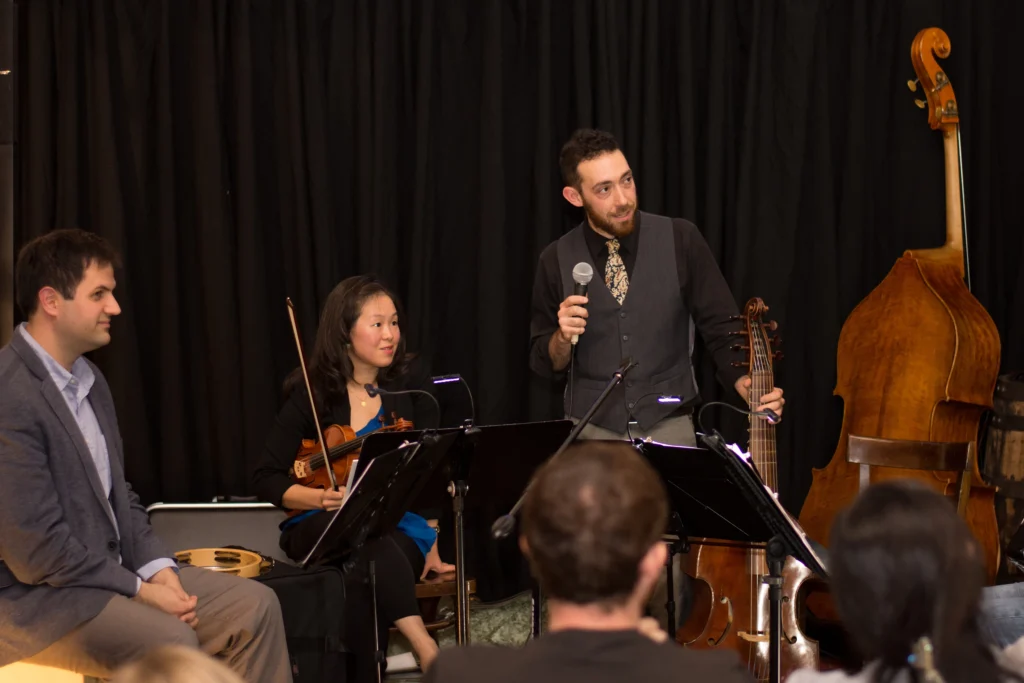
This openness creates an atmosphere that feels both rare and immediate. There is a natural ease to the way performers and listeners interact. The usual distance between stage and audience softens, allowing for a more direct form of engagement. Conversations extend beyond the formal boundaries of performance. Listeners are not simply present, they are involved, drawn into a shared experience that values curiosity as much as expertise.
The intellectual dimension of the festival reveals itself not through abstraction but through thoughtful integration. Panels and discussions are not positioned as separate from the music but as an extension of it. Themes emerge across performances, creating a broader framework through which the work can be understood. Whether exploring historical context, performance practice, or contemporary questions about creativity, the festival invites its audience to consider music as part of a larger cultural dialogue.
Arceci’s sensibility is especially evident in the way the festival approaches tradition. There is a clear respect for the past, but it is never treated as static. Historical works are approached with care and insight, while contemporary compositions are given the space to resonate on their own terms. This balance between preservation and exploration allows the festival to feel both grounded and forward-looking.
Over time, the Winchendon Music Festival has grown in stature without losing its sense of intimacy. Internationally recognized artists appear alongside emerging voices, creating a dynamic that feels both inclusive and discerning. The setting itself plays an important role in shaping this experience. Winchendon remains a small New England town, and that scale contributes to the festival’s character. It allows for a level of focus and connection that larger cultural centers often struggle to maintain.
There is also a certain intentionality in the way the festival resists excess. It does not seek to overwhelm with volume or variety for its own sake. Instead, it values precision. Each element is considered, and each program is carefully constructed. This measured approach lends the festival a sense of clarity. Nothing feels superfluous. Every detail contributes to a cohesive whole.
What Arceci has created is, in many ways, a study in balance. Intellectual rigor coexists with accessibility. Artistic excellence is presented without unnecessary ornamentation. The festival neither caters to expectation nor withdraws into exclusivity. It occupies a space that feels both refined and welcoming, a combination that is more difficult to achieve than it might appear.
There is a growing recognition that experiences of this kind offer something essential. They provide an alternative to the prevailing emphasis on scale and visibility. They suggest that meaning can be found not in expansion but in attention, not in spectacle but in substance. The Winchendon Music Festival exemplifies this idea with quiet assurance.
In Winchendon, music is given the space to unfold fully. It is allowed to challenge, to connect, and to resonate beyond the immediate moment of performance. Under Arceci’s guidance, the festival has become more than a series of concerts. It is a sustained exploration of what music can offer when it is approached with care, intelligence, and an openness to possibility.
The result is a cultural offering that feels both timeless and distinctly contemporary. It does not demand attention, yet it commands it. It does not rely on excess, yet it leaves a lasting impression. And in that balance, Andrew Arceci has shaped something that feels not only significant but enduring.