
























Most musicians trying to use AI in 2025 either hide it or apologize for it. FuzeTheory does neither. The Charlotte-based artist built his entire debut album around the one question everyone’s thinking but few are addressing head-on: what happens when machines start making art with us?
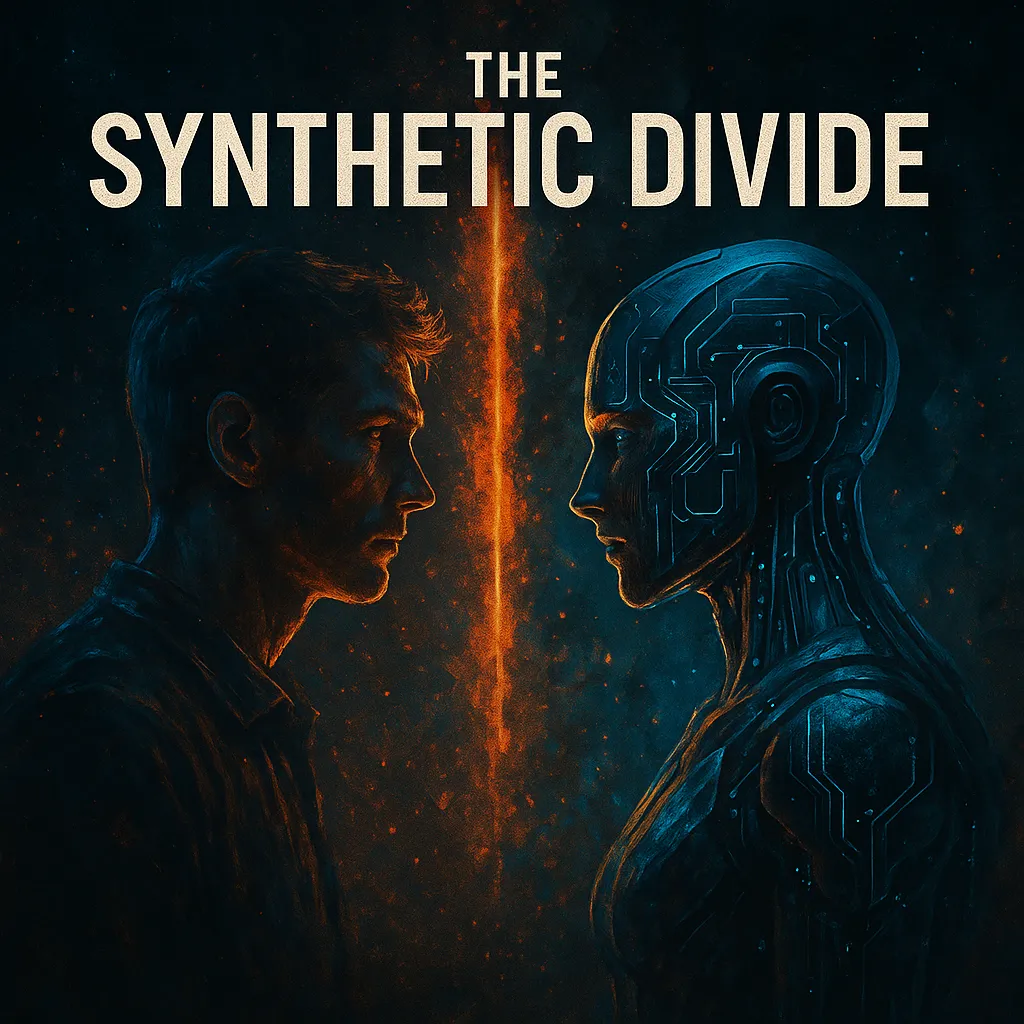
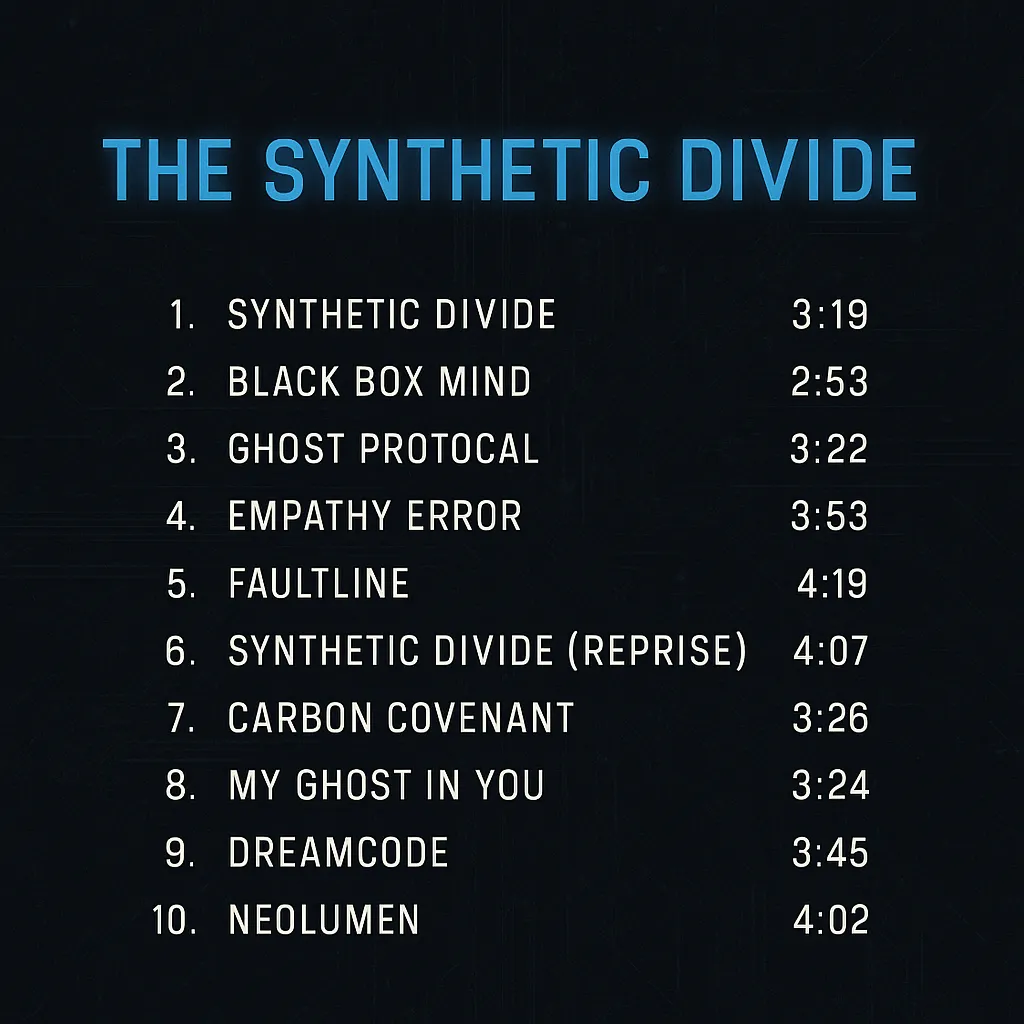
“The Synthetic Divide” isn’t subtle about its premise. The 10-track concept album charts humanity’s relationship with artificial intelligence from fear and fragmentation through to what FuzeTheory calls ‘co-creation and transcendence.’ It’s ambitious stuff for an indie release, blending ambient synths with cinematic alt-rock before closing with ‘Neolumen,’ a final track that fuses all nine previous genres into one. The entire thing came together in four days of near-constant creative flow, sleeping two to three hours between writing and sequencing sessions.
FuzeTheory’s background explains a lot. He’s an engineer at a major tech company who spent years studying AI development, watching the technology evolve from novelty to genuine creative tool. He used to play piano as a kid and spent years writing fan fiction, original screenplays, and poems that never got finished. “I’ve had a goal for a long time to produce my own TV series or animated series, but I lacked the resources and connections,” he explains. When he tried using generative AI to produce a short film in May 2025, the tech wasn’t there yet. But when he tested an AI song generator, something clicked. “I was blown away by how far the tech has come.”
He compares his process to how Bernie Taupin and Elton John worked together. “The way I work with AI is similar to how Bernie created the lyrics and song structures while Elton created the melody and performed the music.” He writes all his own lyrics, composes the songs, then uses AI for what he calls “synthetic performance.” Sometimes he’ll edit and rework elements in his DAW. It’s a hybrid approach that doesn’t fit neatly into either the “real music” or “AI slop” camps people love arguing about online.
His most recent single “Golden Handcuffs” dropped November 17th, clocking in at 2:43 with hard-hitting vocals, impressive guitar work, and wolf-like growling effects adding through the mix. The standout lyric cuts deep: “I’d almost rather trade these golden handcuffs for iron chains / because at least then I know I’m trapped like a slave.” It’s the kind of line that hits different coming from someone who actually works in big tech.
What sets FuzeTheory apart isn’t just his willingness to use AI tools. It’s his insistence on transparency about it. While Billboard hits quietly incorporate AI without disclosure, he’s upfront about his methods even when it might hurt his reception. “I know that generative AI isn’t going anywhere, even if the AI bubble bursts,” he says. “So instead of resisting it, I want to embrace it while trying to find the ‘right’ way to use this new tech and mitigate against the very real risks it poses.”
He frames his work as a resistance, channeling rage against inequality and systemic oppression into experimental fusions that push boundaries. Asked how he’d describe his music to a first-time listener, he doesn’t hesitate: “A philosophically deep and forward-thinking sonic rebellion that can’t be contained to a single genre.”
His influences tell you where he’s coming from. He cites Rick Rubin because “the future of music production is going to depend even more on a record producer’s musical taste.” Kraftwerk and Depeche Mode pioneered electronic music when synthesizers and drum machines were controversial new tools. Nine Inch Nails and Linkin Park brought industrial and nu-metal into mainstream consciousness. The synthwave aesthetic of Kavinsky and Gunship runs through his work alongside the rap-rock energy of NEFFEX and Eminem’s influence on tracks like “Cyberpunk 2025.”

He’s careful to note he’s not comparing himself to these legends, just acknowledging their impact. But the parallels matter. Every generation of music technology faced pushback before acceptance. Synthesizers, drum machines, samplers, Auto-Tune. The conversation repeats with different tools.
Beyond the technology debate, FuzeTheory’s goals are practical. He wants people to enjoy the music and share it. He wants traditional musicians to collaborate with him – he has lead sheets and master rhythm charts for all 10 tracks ready to go. And he wants to bring joy to what he calls “a messed-up world,” even if that joy comes in the form of dystopian industrial tracks.
His broader philosophy shows up in unexpected places. Tucked between songs about AI and corporate oppression is a message about kindness, generosity, and empathy – using them as a “North Star” even when you fall short. It’s earnestness most artists would bury under layers of irony, but he puts it right out there.
The central question driving everything is direct: “AI is here to stay, so the question becomes what next? not how do we go back?” Right now he’s promoting “The Synthetic Divide” – a full 36-minute concept album with a cohesive narrative arc – while working on new singles and collaborations. Next year brings “The Machine-Man,” his second album flipping Kraftwerk’s concept with his own arc. For someone who picked up a DAW less than a year ago and wrote his debut album in four day flow state, he’s not just experimenting with ideas, he’s executing them. Whether his approach becomes the standard or stays an outlier, he’s already moved past the argument most artists are still having.
You can find FuzeTheory’s music on Spotify, Apple Music, and all major streaming platforms, with more at his website. Follow him on YouTube and TikTok for updates on “The Machine-Man” and upcoming collaborations.