




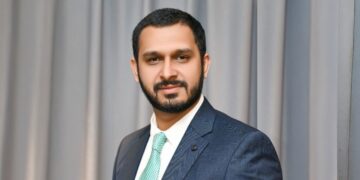




















Most executives talking about AI right now sound like they’re reading from the same deck. Big claims, vague timelines, and a worrying lack of specifics about who actually benefits. Enzo Carpanetti tells a different story. The global infrastructure executive, who began his career in Panama and still keeps an office there, frames AI as a tool that should make people better at their jobs, not redundant.
That distinction matters more than it sounds. In emerging market infrastructure, where Enzo Carpanetti has built a 20-year career across OECD countries and developing economies, the gap between flashy strategy decks and operational reality is where projects usually fall apart. He calls his approach being in the “digital trenches,” shorthand for the hands-on involvement most senior executives quietly avoid.
His stated philosophy is that progress is strongest when technology, strategy, and human understanding move together. That’s a line that could read as platitude in someone else’s mouth, but his career path suggests he means it. With a multidisciplinary background spanning electromechanical engineering, artificial intelligence, strategic management, and finance, he’s one of the rarer profiles in infrastructure. He’s equally comfortable explaining a balance sheet to investors and pulling apart the operational model of an automated transport system.
Panama has played a recurring role in that journey. Carpanetti’s first professional job was based there, and Panama remains one of the locations where he keeps an active office. That extended exposure shaped how he thinks about cross-border infrastructure work, particularly the importance of local context when advising shareholders on where and how to invest.
His current focus tracks what he calls the “Mega Forces” of 2026. Structural shifts like AI adoption, the move toward a low-carbon economy, and a much heavier push into private infrastructure across emerging markets. Within that frame, Enzo Carpanetti spends his time helping shareholders invest in, own, and operate major assets across energy, transport, and mobility. The work increasingly leans on automation and digitally enhanced systems, but he’s careful about how that gets framed to clients.
His framing leans toward augmentation rather than replacement, positioning AI as a way for operators to make smarter, faster decisions rather than something that does the work for them. That’s an important distinction in markets where job displacement anxiety can stall genuinely useful projects. Carpanetti’s view is that human-centric AI is what actually gets adopted. Replacement narratives stall in committee. Augmentation gets funded.
Speaking more than five languages and traveling constantly, Enzo Carpanetti treats international work as something more than logistics. He’s described using business travel to engage with local communities and understand the regions where infrastructure decisions have direct human consequences. From Panama to other emerging market corridors, that on-the-ground perspective has informed a leadership style built on adaptability rather than imposed templates.
What stands out about Enzo Carpanetti isn’t only the technical depth, though that’s real. It’s the insistence that hands-on involvement is a strategic necessity, not micromanagement. Senior executives who lose touch with execution lose the ground truth needed to move quickly when markets shift. In 2026, with private infrastructure investment in emerging markets a defining theme of the year, that ground truth is arguably the rarest commodity in the room.
More on Carpanetti’s work in Panama and across global infrastructure markets is available at enzocarpanetti.com, with updates on LinkedIn and X.