

























Indiepocalypse doesn’t ask much of your time, but it asks everything of its audio. The interactive visual novel tracks an amateur game developer trying to balance work, social life, and creative ambition, all while navigating multiple branching paths and endings. For a game built on micro-spaces and quiet choices, the score isn’t decorative. It’s load-bearing. Composer Danielle Hani built an audio architecture that compensates for limited visual assets and carries the emotional weight the game can’t express through dialogue or animation alone. Without this level of control, Indiepocalypse would collapse into a series of disconnected scenes. Instead, it feels like a coherent world.
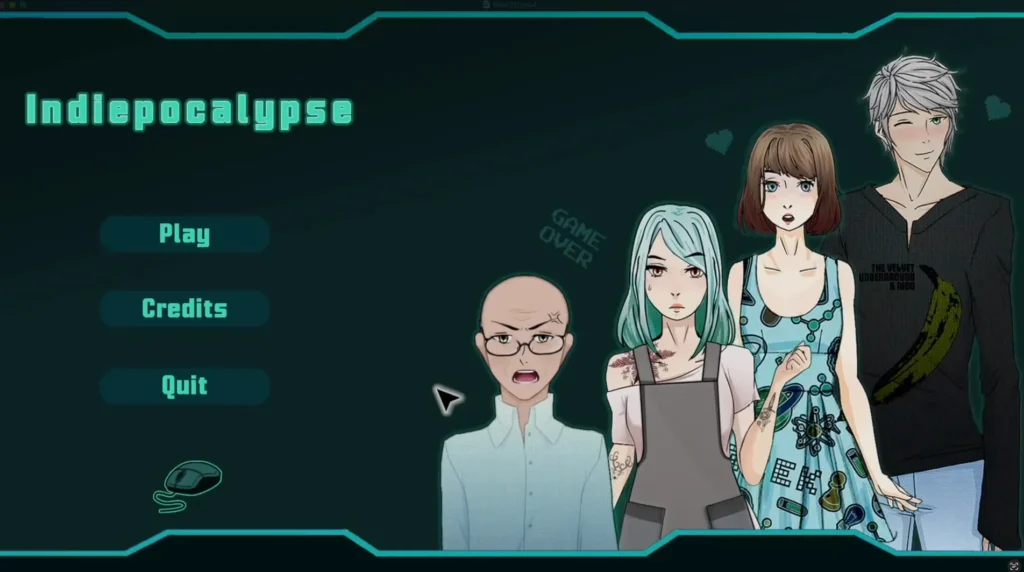
Hani’s approach starts with understanding that repetition is the enemy in looping game music. Each environment gets its own musical fingerprint, a tight motif that cycles without grating. The main menu establishes patient, restrained music that signals introspection without drama. It doesn’t push you but makes you curious about what’s ahead. That patience becomes the baseline for everything else, establishing a mood that keeps players engaged rather than clicking away within the first thirty seconds.
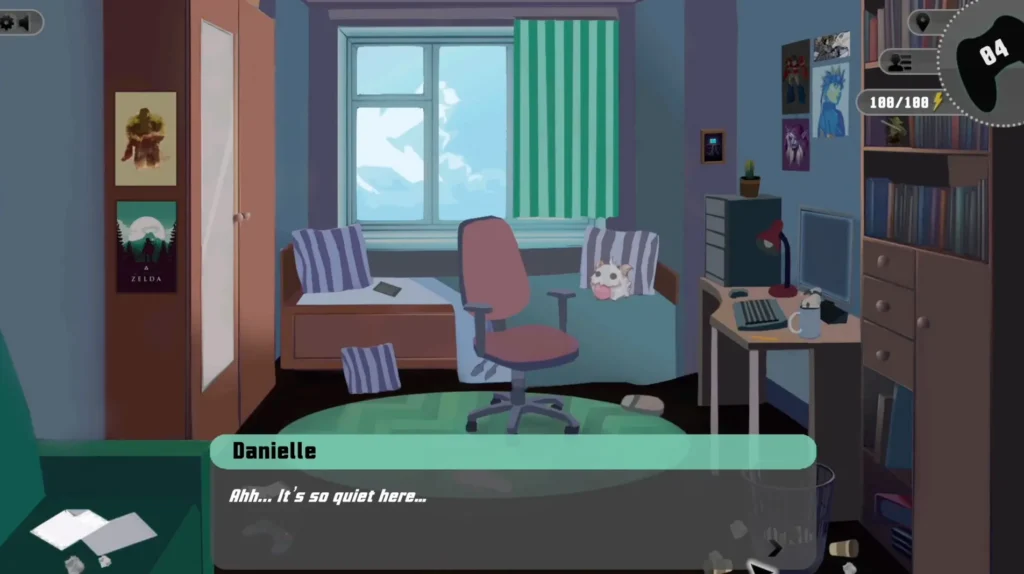
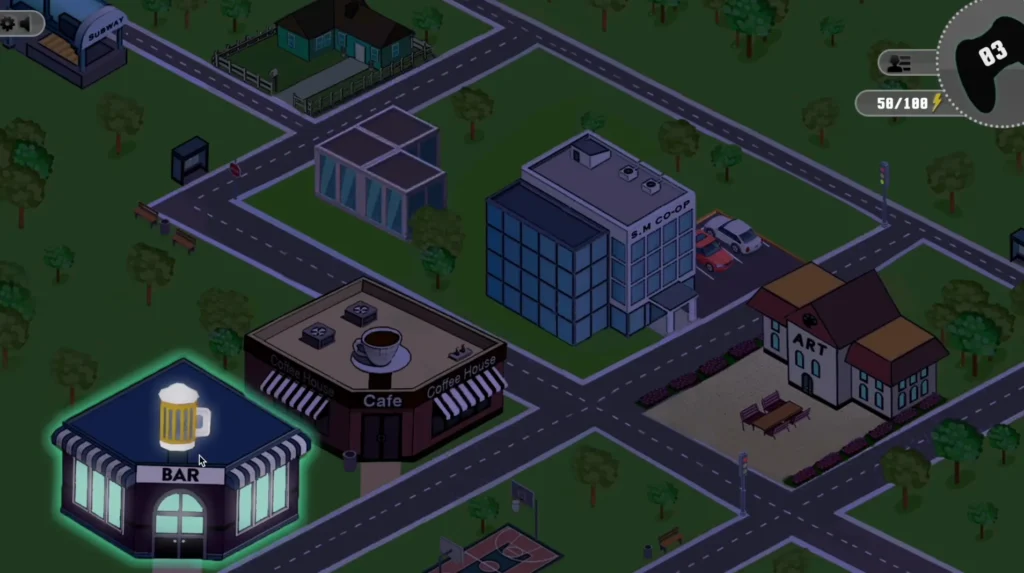
Inside the protagonist’s bedroom, Danielle Hani pulls back further. The audio here is almost skeletal: room tone, bird chirps, the low hum of white noise signaling activity in the distance. It’s a deliberate absence of music, creating a pocket of safety and intimacy that contrasts sharply with the game’s busier exterior spaces. This restraint matters because it gives players a breather between the game’s social environments like the cafeteria and bar, preventing audio fatigue that would otherwise build up across multiple playthroughs. When the player steps into the isometric city map, the shift is immediate and functional. The city opens up, trading the acoustic dryness of home for layered street loops that suggest movement and possibility. Hani uses BPM-matched cross-fades to smooth these transitions, avoiding the jarring cuts that would yank players out of immersion and remind them they’re clicking through a game rather than inhabiting a space.
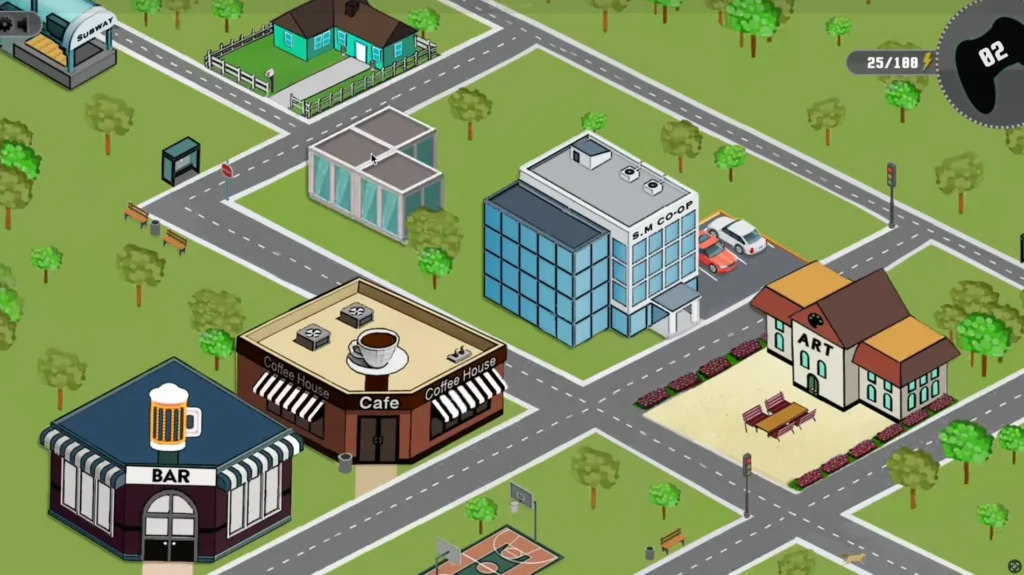

The day-to-night cycle on the city map reveals both her technical fluency and her understanding of player psychology. Rather than swapping out entire tracks, Hani layers stems that fade in and out based on time of day. Daytime brings the busy city noise, brighter effects and toned down percussion that match the activity of the urban environment. When night falls, those elements fade out and the soundscape shifts. The busy city ambience gets traded for deeper, lower-contrast white noise that reflects the quiet of nighttime streets. It’s a subtle modulation that mirrors the passage of time without calling attention to itself. More importantly, it makes the game world feel alive and responsive, like it continues existing even when you’re not actively making choices. That sense of a living world is what keeps players coming back to explore different narrative branches.
The bar scene offers one of the game’s sharpest audio tricks and one of its most effective immersion tools. From outside, the music and crowd effects sound muffled, filtered through walls using a low-pass effect that cuts the high frequencies. As you enter, that filter opens up and the full-spectrum audio hits. It’s a small touch, but it adds spatial realism to a 2D game and makes the bar feel like an actual place with physical boundaries rather than just another menu screen. Inside, the music shifts to something looser and more textured, matching the visual cues of dim lighting and nightlife energy. This isn’t just atmosphere for atmosphere’s sake. It creates emotional contrast that makes the protagonist’s choices feel weightier, because each environment offers a distinct emotional refuge or pressure point.
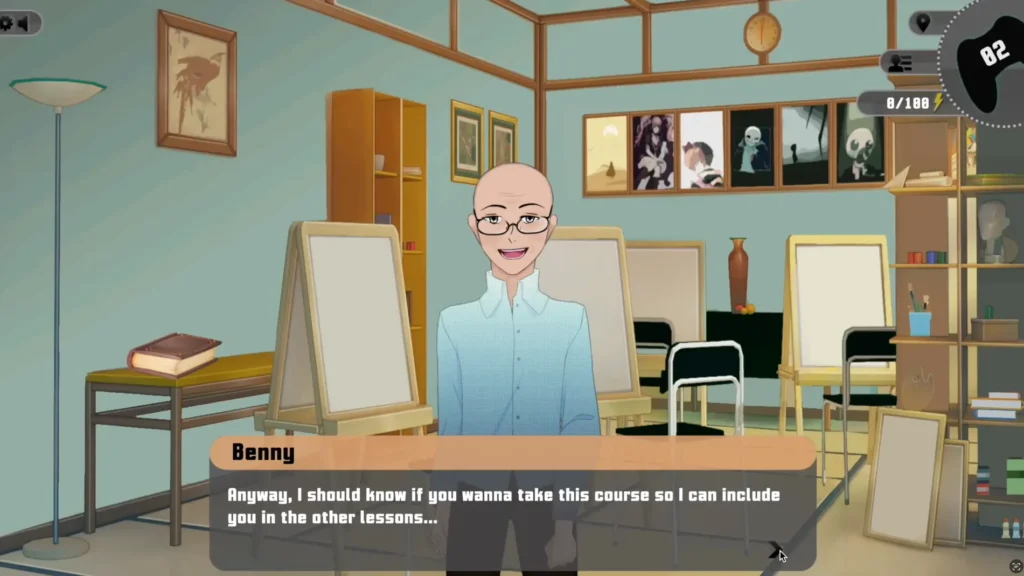
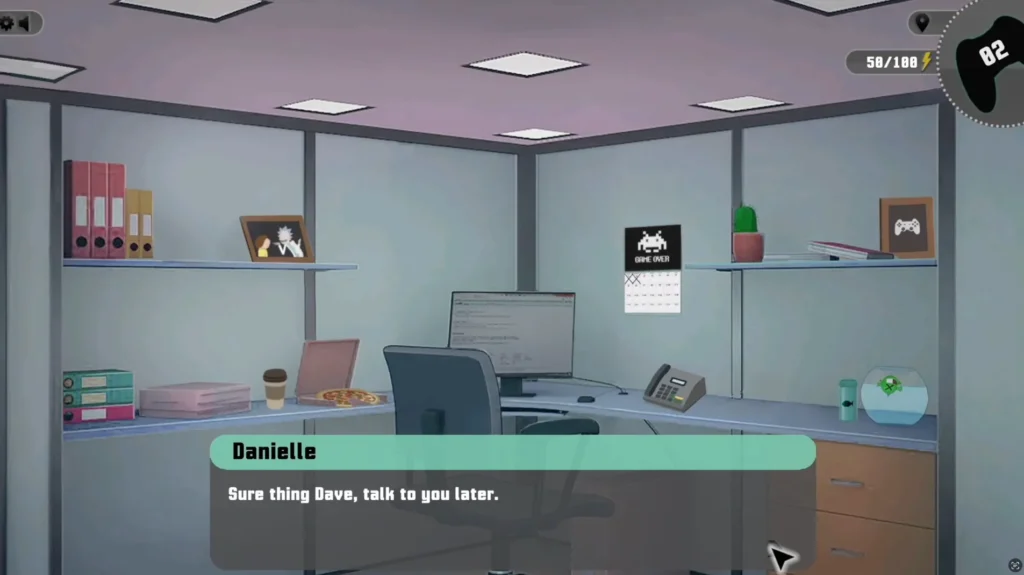
Conversely, the office environment feels deliberately lifeless, and that discomfort is doing real work. Danielle Hani leans into harsh fluorescent hum and sparse, uncomfortable tones, the blaring telephone cutting through the dead air. It’s oppressive by design, reinforcing the narrative weight of the “daily grind” before the player escapes back into the creative chaos of Indiepocalypse itself. The art gallery receives its own distinct treatment, contributing to the environmental variety that prevents the game from feeling monotonous. These aren’t arbitrary aesthetic choices. They’re narrative scaffolding that tells the player how to feel about each space before any dialogue kicks in.
What makes Hani’s work critical to the game’s success is how tightly she integrates sound design with composition. UI clicks, dialogue typewriter effects, and ambient environmental cues all sit inside the same tonal universe as the music. She varies pitch and timing on repeating samples to avoid listener fatigue, a technical detail that most players won’t notice consciously but will absolutely feel. The result is a game world that breathes coherently even when you’re not actively playing it. For a visual novel that depends on players returning for multiple endings, this cohesion is the difference between a forgettable demo and something that sticks.
For an indie project with minimal assets, this level of control is rare and essential. Danielle Hani doesn’t hide behind long-form arrangements or cinematic swells because the game can’t support them. She works with loops, often just seconds long, and makes them feel complete. That’s the skill on display here: not the ability to write more, but the discipline to write exactly enough and to make those tight constraints feel like intentional design rather than limitation. In Indiepocalypse, the music isn’t supporting the experience. It’s building it.